
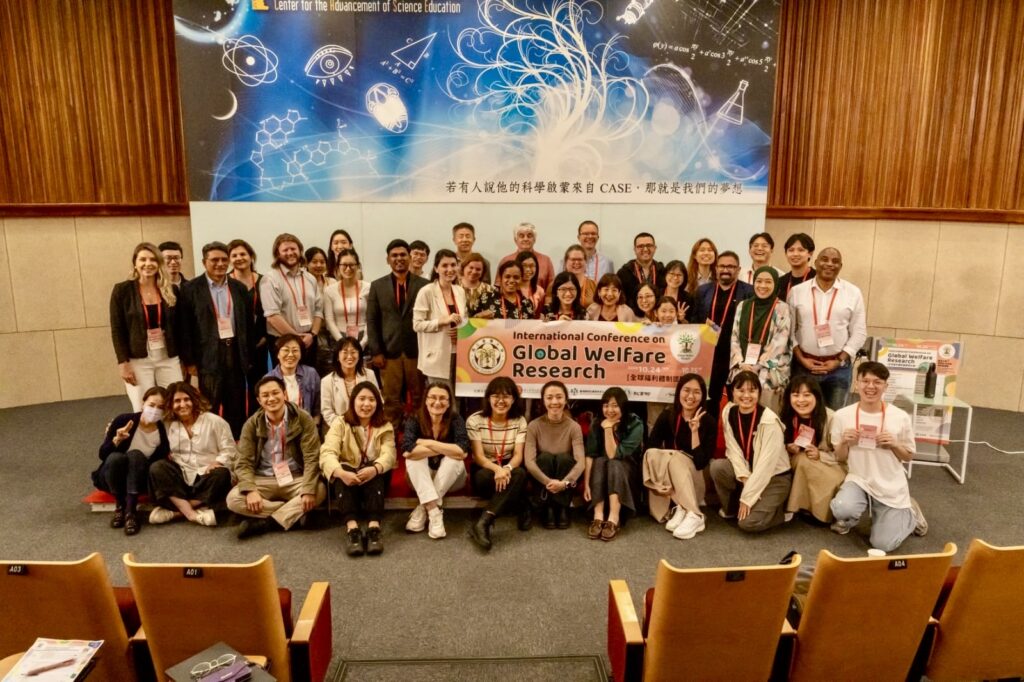
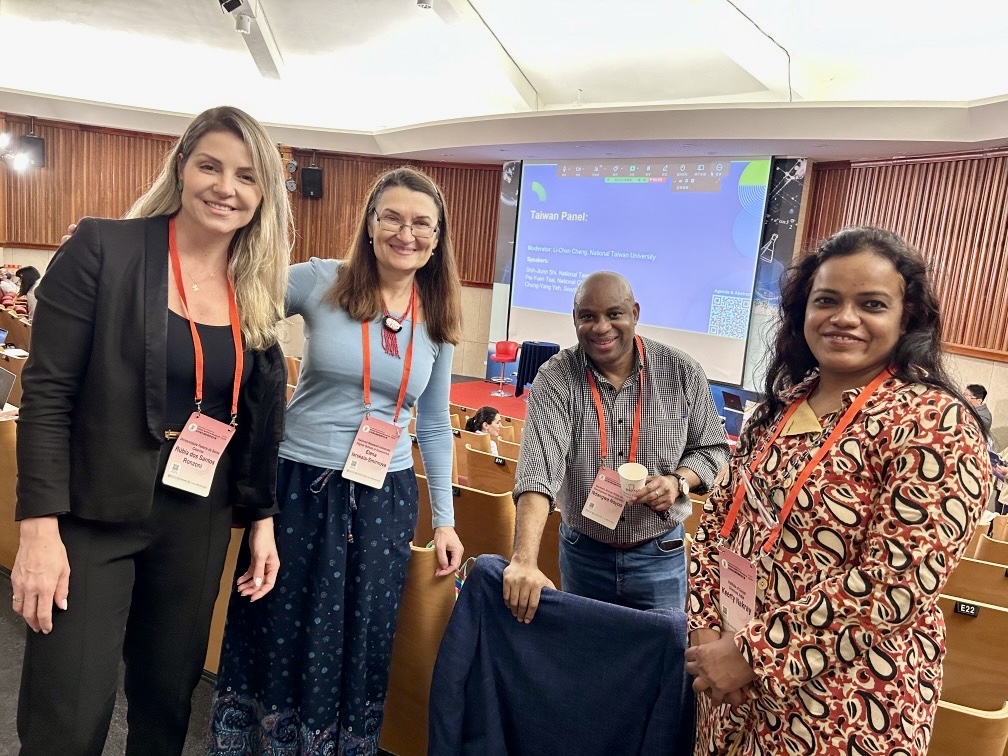
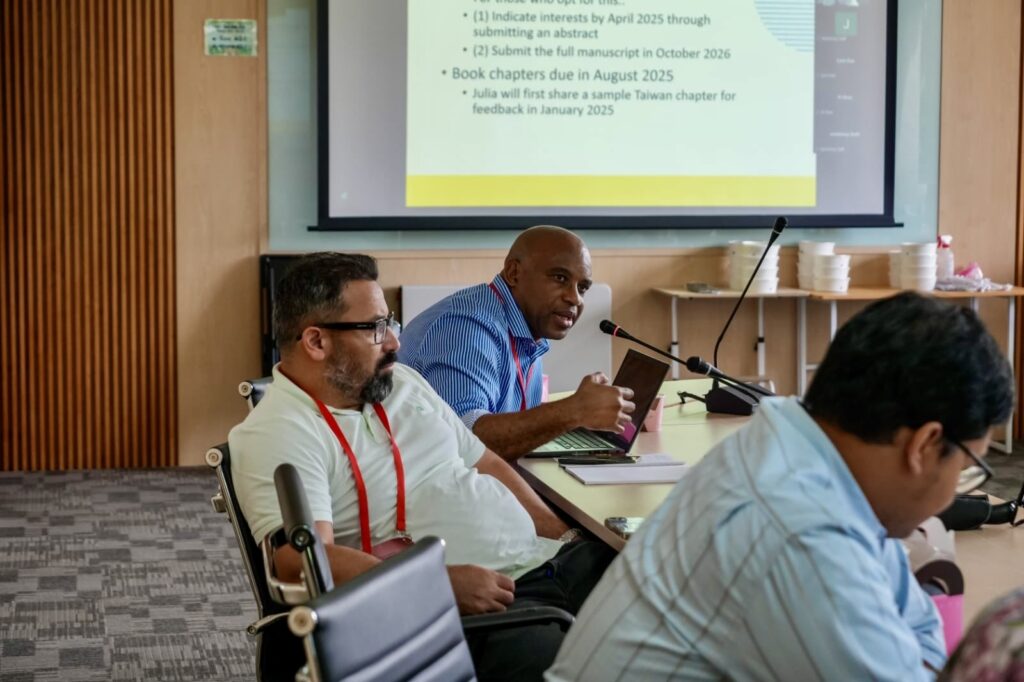
SAPDN recently completed the Global Welfare Regimes Research in collaboration with the National Taiwan University. Professor Noyoo proudly represented SAPDN at the International Conference on Global Welfare Research, which brought together scholars from 24 countries across all continents. Among them were representatives from three African nations: Ghana, South Africa, and Uganda. The purpose of the paper was to examine South Africa’s comprehensive social protection system and the social wage which is provided by the state. It was informed by a much broader research study that was spearheaded by the Department of Social Work at Taiwan National University, which focused on global social welfare regimes, particularly placing emphasis on state subsidies for citizens.”
Introduction and Background
- The purpose of this paper is to examine South Africa’s
comprehensive social protection system and the social wage
which is provided by the state. - It is informed by a much broader research study that was
spearheaded by the Department of Social Work at Taiwan
National University which focused on global social welfare
regimes, particularly placing emphasis on state subsidies for
citizens. - The research study had practically covered every continent of the
world and the authors were part of a group of African researchers
who represented South Africa. - This paper is two-pronged. The first part provides an overview of
- South Africa’s comprehensive social protection system that
- includes the social wage.
- The second part of the paper critically analyses and interprets
data that emanated from a desk research study that was
undertaken by the authors. - The research had sought to ascertain the various forms of state
subsidies provided by the state to South Africans. - The research was both qualitative and quantitative in outlook.
- In the context of South Africa, we locate subsidies within the
- ambit of the country’s expansive social protection system which
- encompasses the social wage.
- Social assistance pays an income directly to vulnerable households,
while the other public services that make up the social wage replace
or subsidise day-to-day expenses such as housing, education and
amenities, or reducing the cost of living (National Treasury, 2013). - The social wage is accessed by citizens as cash benefits, social
services or public goods distributed by the state.
Socio-political and economic context
- South Africa’s population is around 64 million, according to the latest mid-
year population estimates for 2024 from Statistics South Africa (Stats SA). - Life expectancy at birth is now 66.5 years- a significant increase from the
estimated 53.6 years in 2005. - About 27.5% of the population is under 15 years old, while approximately
9.7% (6.1 million) are aged 60 years or older. - There are more than 26 million South Africans who benefit from the
state’s social assistance programme on a monthly basis. - There are close to 9 million unemployed people receiving the Special
Social Relief of Distress Grant every month. - South Africa’s economy remains crippled by multiple structural
- constraints, including electricity shortages (resolved in the latter part
- of 2024), transport bottlenecks (ports and freight rail), and a high
- crime rate (World Bank, 2024).
- Social indicators remain dismal.
- Poverty is high and was estimated at 62.7% in 2023– when using the
upper-middle-income poverty line. - Inequality remains among the highest in the world (World Bank,
2024).
The post-apartheid welfare regime
- South Africa aspires to become a capable and developmental state in
line with the country’s National Development Plan (NDP) of 2011. - It has a comprehensive social protection system encompassing: social
assistance (and the social wage), contributory social insurance and
developmental social welfare services. - Social assistance is typified by non-contributory social grants, namely:
Child Support Grant (CSG), Old Age Grant (OAG), Care Dependency
Grant, Grant in Aid, Foster Care Grant, Disability Grant, Social Relief of
Distress (and ‘COVID GRANT’ – Extended beyond the pandemic). - According to the National Treasury (2024) over the medium term, total consolidated
- spending is expected to increase from R2.37 trillion in 2024/25 to R2.6 trillion in
- 2026/27.
- Government’s priority is to enhance spending quality and minimise inefficiency while
ensuring sustainable public finances– in other words, to increase the value for money
from this spending. - An amount of R251.3 billion has been added to functions including health, education,
peace and security and social development. This is mainly to provide for the
carry‐through costs of the 2023/24 wage increase, the extension of the COVID‐19 social
relief of distress grant and other social protection spending (National Treasury, 2024). - NB: 1 United States Dollar equals 17.60 South African Rand (ZAR)
- South Africa is currently sitting with a mixed or hybrid welfare regime
- that constitutes reformed features of the old colonial-apartheid
- welfare regime which is tax-based and non-contributory, and means-
- tested, such as the social assistance and public employment schemes;
- some class-based entitlements with ‘race connotations’ which owe
- their existence to the ‘sunset clause’ compromises which are
- contributory or subsidised by the state, and the new social welfare
- provisions that arose out of the contestation of the liberation struggle
- known as the ‘social wage’ and developmental social welfare (Noyoo,
- 2017).
Objective:
- The project aimed to explore the features of global welfare regimes, particularly focusing on the design
and effectiveness of social protection systems. By using the Model Family Approach (Bradshaw & Finch,
2002; Van Mechelen et al., 2011), the research assessed how different welfare states provide support to
families through various forms of social benefits. - This presentation highlights the South African case within the Global Welfare Regimes study.
Approach to Data Collection: - Desktop research was used to gather data. The data was gathered on labour income, social contributions,
taxes, tax benefits, and cash benefits for seven income cases and a variety of family types across several
countries. These profiles were crucial for evaluating social protection arrangements and welfare state
efforts (Van Mechelen et al., 2004). For the purposes of this presentation, we will focus on two income
cases: Income Case 5 (middle income) and Income Case 6 (no income). - Income Cases:
- Family Types:
- One earner on minimum wage x 16 hours per
- week
- One earner on half national average earnings
- One earner on national average earnings
- Two earners, one on male average and one on
- half female average earnings
- Two earners, both on average earnings
- No earners – receiving social assistance
- One earner on minimum wage full time
- Single below 60
- Lone parent with one child aged 0-11 months
- Lone parent with one child aged 5 years
- Lone parents with two children aged 7 and 14
- Couple with one child aged 0-11 months
- Couple with one child aged 5 years
- Couple with two children aged 7 and 14
- Couple without children
- Couple with three children aged 1, 5, and 7 years
- Lone parent with two children aged 15 and 17
- Elders:
- Single – no pension; average pension
- Couples – no pension; average pension
- Three generational households
Focus on Income Case 6 (No Earners – Receiving Social Assistance):
We begin with Income Case 6, the only no-income case, which was utilised as the first
family profile for data collection across all countries. This case highlighted the critical role
of social protection systems, offering support such as:
- Child Support Grants
- National School Nutrition Programme
- Free Healthcare
- Subsidised Early Childhood Development Services
Summary: Means-Tested Social
Assistance and Inequality in South
Africa
- Means-Tested Approach:
- Effectively targets the poorest households (e.g., Income
Case 6) through grants and social wage programmes,
reducing absolute poverty. - South Africa’s poverty rate remains high, with
approximately 18.2 million people living below the Upper-
Bound Poverty Line (UBPL), which is set at R1,417 per
month ($73). The Lower-Bound Poverty Line (LBPL) is
R945 per month ($49), while the Food Poverty Line (FPL)
stands at R663 per month ($34), representing the
minimum required for basic food needs. These thresholds
reflect varying levels of deprivation, with the FPL
indicating extreme poverty, where individuals cannot
afford even basic nutrition. - Gaps in Support:
- Low- to middle-income families (e.g., Income Case 5)
receive minimal assistance despite financial pressures.
These households fall into a middle-income trap,
excluded from social grants but still vulnerable to
economic hardship. - Exacerbating Inequality:
- South Africa’s extreme inequality, reflected in a Gini
coefficient of 0.67 (one of the highest globally), is
further exacerbated by the current social assistance
system. This system, while targeting the poorest, leaves
a large segment of low- to middle-income households
underserved, deepening socio-economic disparities. - Gender Pay Gap Impact:
- Furthermore, the 17% gender pay gap intensifies the
economic strain on women-led households, further
widening inequality.
While the South African government oversees an extensive social assistance programme
aimed at alleviating poverty, the reality remains that 55.5% of the population continues to
live in poverty. Despite the breadth of this programme, which includes substantial cash
transfers and in-kind support, inequality remains staggeringly high, and the
unemployment rate persists as a major socio-economic challenge.
- The social assistance system is comprehensive, but its impact is insufficient to fully
address the entrenched issues of structural poverty, inequality, and unemployment. A
more robust, multi-faceted approach is required to uplift the most vulnerable and bridge
the gap between the affluent and the impoverished, ensuring that the social protection
system fulfils its potential in fostering economic security and social equity.
References
- Bureau of Market Research. (2023). National income and expenditure patterns report. Retrieved from https://www.unisa.ac.za/sites/bmr
- Department of Basic Education. (2023). National policy on no-fee schools: 2023 implementation report. Retrieved from
https://www.education.gov.za - Department of Basic Education. (2023). NSNP 2023 annual report: Reaching learners across South Africa. Retrieved from
https://www.education.gov.za - Equal Education. (2023). The state of no-fee schools in South Africa: 2023 update. Retrieved from https://www.equaleducation.org.za
- National Treasury (2021). Budget Review. National Treasury.
- National Treasury (2024). Budget Review. National Treasury.
- Noyoo, N. (2017). Social policy and welfare regimes typologies: Any relevance to South Africa? SOZIALPOLITIK.CH, 2:2017, 1-16.
- Organisation for Economic Co-operation and Development (OECD). (2023). Economic review of South Africa: Inequality and growth
challenges. Retrieved from https://www.oecd.org - Statistics South Africa (Stats SA) (2024). South Africa’s population surpasses the 63 million mark. Retrieved from
https://www.statssa.gov.za/?p=17430 - Statistics South Africa (Stas SA). (2023). Poverty trends in South Africa: Latest poverty and inequality data. http://www.statssa.gov.za
- UNICEF South Africa. (2023). ECD services in South Africa: Progress and challenges. https://www.unicef.org/southafrica
- World Bank. (2023). South Africa economic update: Inequality and poverty in a post-COVID world. Retrieved from
https://www.worldbank.org - World Bank (2024). South Africa. World Bank.